
History of Ayolas
Long before the city of Ayolas was founded, the San José Mí outpost already existed, set up as a port for the Jesuit Reduction of Santiago Apóstol after 1669. Oranges, hides and, above all, yerba mate were shipped out through that port, as part of the trade with the other reductions in the Itapúa and Argentina area.
The San José Mí outpost and its chapel
In 1615 the Jesuit San Roque González founded the Our Lady of Itapúa Reduction, which later moved across the river to what is now Encarnación. The area on the Argentine side was called Arrinconada de San José, under Paraguayan administration. Years later, in 1815, a stone wall was built there, giving rise to the Trincheras de San José — the city's first name — and on November 8, 1870, the Candelaria Department was created with Trincheras as its capital. Nine years later the name changed to Posadas, which is why, when the port was set up at this outpost on the Paraguayan side, it was named San José Mí ("Mí", small): the larger city — Posadas — was across the river, and both places had an image of Saint Joseph. The San José Mí Chapel served as a place of prayer for the Jesuits during their work at the port. When they arrived, they chose the town's highest point to build it, which is why it's one of only three spots in San José Mí never affected by the town's repeated floods. It was colonial in style: wattle-and-daub walls, a straw roof over cane laths, a brick floor, and hardwood beams.
The founding of Ayolas (September 12, 1899)
Ayolas was founded on September 12, 1899, on the banks of the Paraná River, at the spot called San José Mí, the former port of the Santiago Jesuit Reduction. Its founding fulfilled a National Congress law from July 7, 1896, authorizing the Executive to found three towns, and a 1897 decree ordering them to be founded along the Paraná River: at Tacuru Pucú, the town of Hernando Arias de Saavedra ("Hernandarias"); at Pira Pytã, the town of Domingo Martínez de Irala ("Puerto Irala"); and at Coratei, the town of Juan de Ayolas, the Spanish captain who was the first to sail up the Paraguay River — a year before the founding of the Fort of Our Lady of Asunción.
Trade, the engine of the economy
Trade was the backbone of San José Mí's economy. By 1900 the port already had significant commercial activity: the era's major firms imported manufactured goods from Argentina and exported local production — cattle hide, horsehair, wild furs, tobacco, sugar cane (with distilleries set up in the area) and fruit such as oranges. From the town's earliest days, firms like Ventron y Cía., Salveraglio y Arrechea, and Coborno Serini were already operating; from the 1940s on, merchants such as Matías Díaz, Petrona Sosa, Dominica Almirón and Felipe Serine joined them.
Popular festivals and traditions
Popular festivals were set up in "green halls": large bowers of cane, leaves and laurel branches, put up where the town square stands today or under the historic Tataré tree. People danced to the accordion and guitar, under little mbopi lamps or lanterns, surrounded by carts with games of chance, canteens and open fires where traditional food was cooked for sale. Carousels and other fairground games were always nearby, and where the square stands today there was also a large municipal market with its own hall.
Natural Heritage
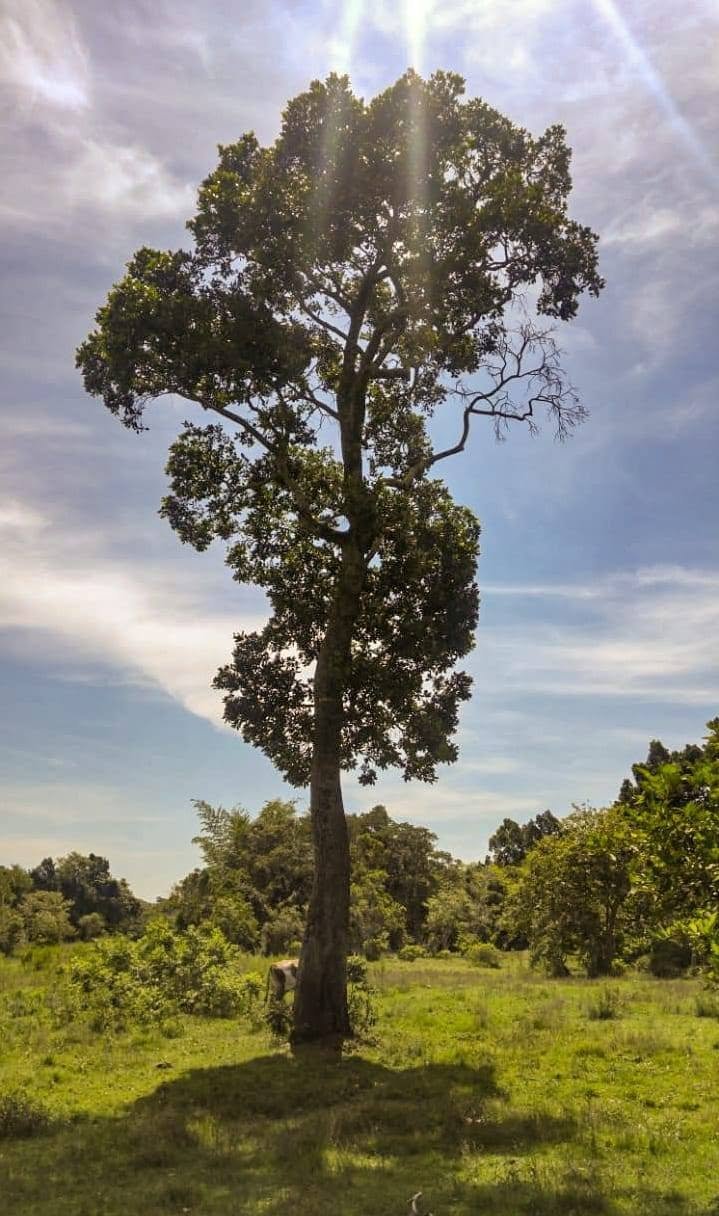
A beautiful tree native to the area, now endangered, declared a natural heritage site and a symbol of the community by municipal resolution. Its name comes from the Guaraní ara (sky) and ry (juice or water): "water from the sky". It grows where water is plentiful, along springs or bordering the wetlands.
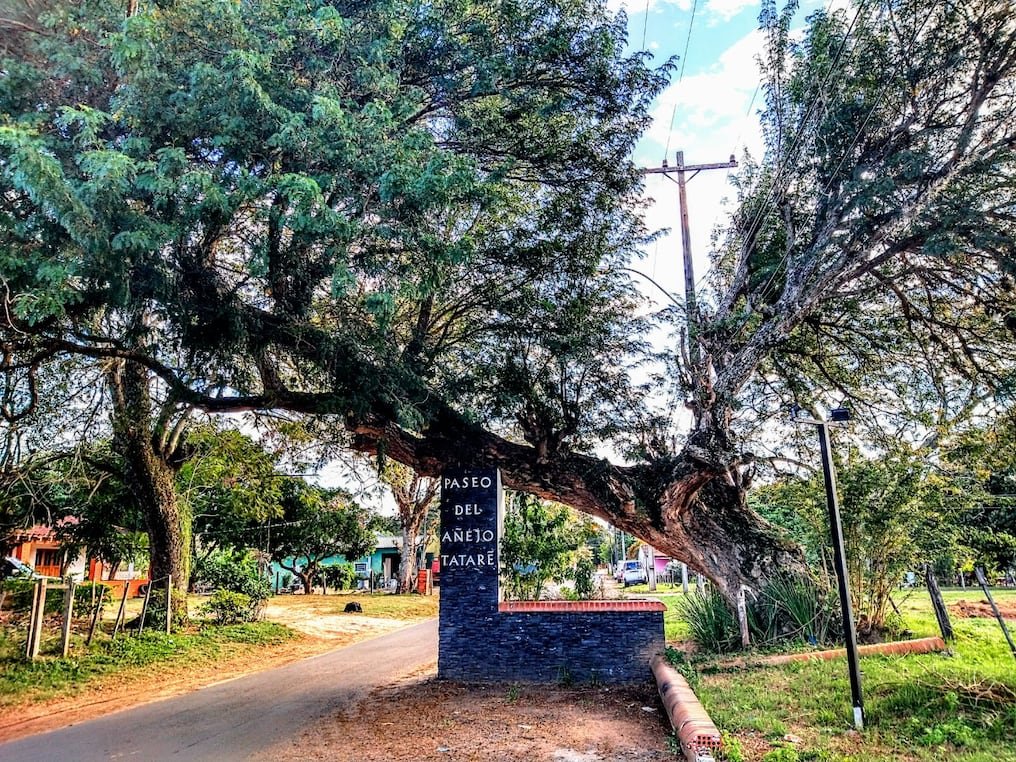
Scientifically Chloroleucon tortum, a leguminous tree of the Fabaceae family. Its name comes from the Guaraní tatãne: from tata ("hard, strong", also "fire") and ne ("bad smell"): foul-smelling wood. The tataré in the San José Mí neighborhood is a true symbol of the city — the town's festivals and economic activity once took place in its shade — and is estimated to date back to 1894. In July 2021 it won the "People's Tree" category of the Colosos de la Tierra contest, organized by the NGO "A Todo Pulmón".
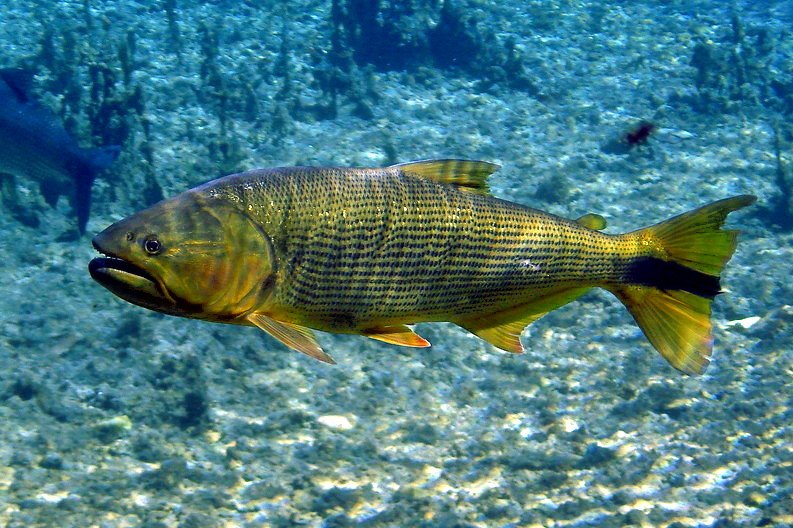
A fish with the scientific name Salminus maxillosus, of the Characidae family, found in the Río de la Plata, Paraná, Uruguay, Amazon and other South American river basins. It's a symbol of the community: it appears on the official coat of arms, and the yellow in Ayolas's flag refers to it. One of the city's biggest events is the Dorado Fishing Contest.
Source: "Pintemos la Historia — Las 23 preguntas sobre mi pueblo Juan de Ayolas", Lic. Juan Carlos Ferreira, with data and information from Ayolas historians Hugo Ramírez Otazu, Gregorio Ferreira and Ramón Domínguez. Courtesy of the Asociación Cultural y Gastronómica del Pira Chyryry, through its president, Lic. Beatriz Portillo de Benítez.